As the core base of the global textile and clothing industry, the manufacturing industry of Bangladesh is facing dual challenges of rising energy costs and tightening environmental policies.
Sitong boiler has recently successfully delivered 2 sets of WNS10-1.25-Y (Q) series oil & gas fired steam boilers to this well-known clothing factory who ordered another 2 sets of waste heat recovery boilers this time. This series waste heat recovery boiler has a high thermal efficiency of 95% and low nitrogen emissions of ≤ 30mg/m ³,which can perfectly adapt to core processes such as ironing and drying in the clothing industry to win significant economic benefits and environmental reputation for the enterprise. Their slipper production line urgently needs efficient energy solutions with business expansion. Based on the high recognition of previous cooperation, the customer has once again chosen
Sitong boiler's 2sets of Q18/450-3.0-1.45 series waste heat recovery boilers to build a dual energy system of "main steam boilers+waste heat recovery". The production of slippers involves key processes such as rubber vulcanization, sole molding, and shoe upper bonding with strict requirements for steam pressure stability, dryness, and continuity. The 2 sets of Q18/450-3.0-1.45 series waste heat recovery boilers delivered by
Sitong boiler can achieve core adaptation to the actual working conditions of customers.
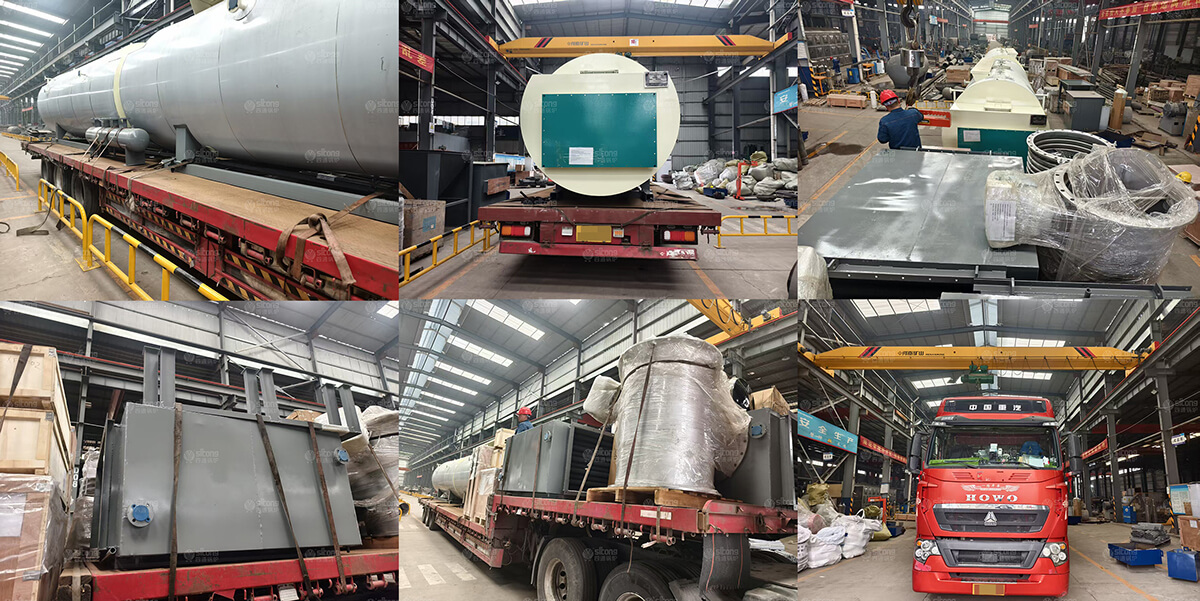
The rated evaporation capacity of the boiler is 18t/h and the working pressure is 3.0MPa.It can far exceed the conventional pressure requirement of 1.0-2.5MPa for slipper manufacturing, and can cope with the instantaneous high pressure peak of the vulcanization process. The steam temperature reaches the saturation superheating standard that can ensure sufficient rubber vulcanization and firm adhesion, and improve product qualification rate. They adopt a flue type structure, which can efficiently recover the waste heat from the exhaust of the WNS series steam boilers (original exhaust temperature of 250-300 ℃), convert it into usable steam, and reduce the exhaust temperature to below 120 ℃ so that they can achieve energy cascade utilization and keep in line with Bangladesh's national strategic goal of "improving energy efficiency by 20%". This project is a typical application example of Chinese boiler equipment in the textile industry in Bangladesh. It not only builds a low-cost and low emission production mode for customers, but also responds to the transformation needs of Bangladesh's textile industry under the global "dual carbon" trend through the system solution of "main energy+waste heat recovery". At present, 338 textile enterprises in Bangladesh have adopted waste heat recovery technology with an average energy utilization rate increase of 1.26%. The successful implementation of this project will provide replicable energy-saving models for more manufacturing enterprises and promote the deepening of China Bangladesh green manufacturing cooperation.The pictures show the delivery site of the boilers:
More information on LinkedIn:
https://www.linkedin.com/feed/update/urn:li:activity:7460580679806881792Delivery video on YouTube:
https://www.youtube.com/watch?v=pE5j3CZfTQc