As an important manufacturing center in Southeast Asia, the local rubber and tire industries in the Bangladesh are in a period of rapid expansion as key supporting facilities for the automotive industry and infrastructure construction with the rapid development of the Dhaka Chittagong Industrial Corridor. Tire production involves complex processes such as mixing, rolling, and vulcanization, which have extremely high requirements for the stability and quality of steam. A large tire manufacturing enterprise located in KEZ Industrial Park, Chittagong, Bangladesh, reached this cooperation with
Sitong boiler who focuses on the research and development and production of high-performance radial tires. Its products cover passenger car and light truck tires, and are supplied to local, South Asian, and Middle Eastern markets. With the increase in production capacity to an annual output of 1.2 million standard tires, the original 3 of old coal-fired boilers occurred the problems like low thermal efficiency lessing than 75%, large fluctuations in steam pressure, frequent maintenance, and excessive emissions. The enterprise is facing increasingly strict environmental regulations and natural gas supply policy adjustments in the local area. So they decided to completely phase out their coal-fired boiler and introduce an efficient, clean, and automated natural gas fired steam boiler to ensure stable heat supply for core processes such as rubber mixing, vulcanization, and mold preheating.
Sitong boiler was ultimately selected as its new boiler supplier after multiple technical comparisons and scheme evaluations.
In response to the increasingly strict environmental regulations and the gradual improvement of the natural gas pipeline network in Bangladesh,
Sitong boiler's design team customized this WNS8-2.0-Y (Q) series natural gas fired steam boiler for the tyre factory based on their production needs. The working pressure of this boiler is 2.0MPa, which is much higher than the standard of 1.25MPa used in ordinary textile factories. It can meet the high temperature and high pressure saturated steam required by tire vulcanizers at 180 ℃ -200 ℃, ensuring that the chemical cross-linking reaction in the vulcanization process can be fully carried out indoors. The "Y (Q)" in the boiler model represents the ability to use both oil and gas. In response to the potential instability or seasonal shortage of natural gas pressure in Bangladesh, this boiler can quickly switch to light oil operation, which can ensure the continuity of the tyre production line and avoid the scrapping of semi-finished tyres in the vulcanization tank due to energy interruption. The boiler adopts a "quick assembly structure" design and is assembled as a whole at the
Sitong boiler factory before being shipped to Chittagong.
Sitong boiler will dispatch a professional technical team to provide on-site guidance. Once the boiler is in place, they will assist the company in completing the pipeline connection and commissioning work before it can be put into operation. In response to the high temperature and humidity climate in Bangladesh,
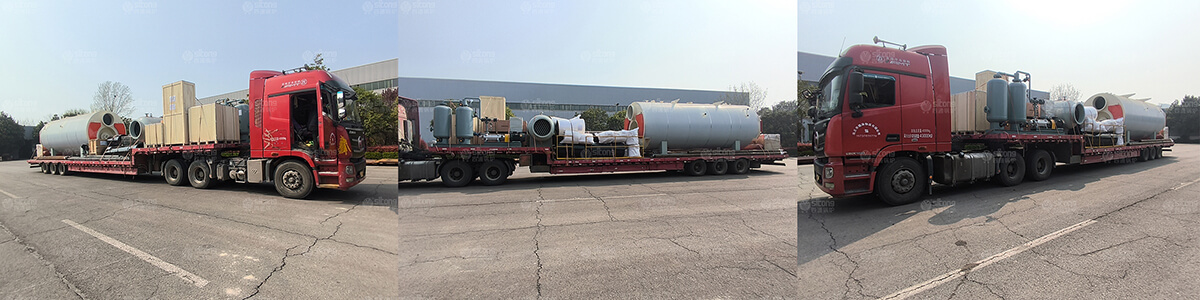
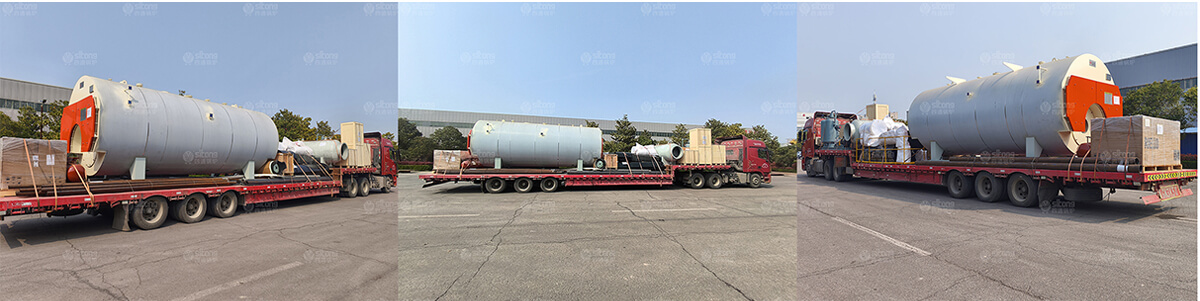
Sitong boiler's engineering team will also carry out moisture-proof treatment on the control system to ensure the stable operation of electrical components during the local monsoon season. The picture shows the delivery site of the boiler:
More information on LinkedIn:
https://www.linkedin.com/feed/update/urn:li:activity:7445737391790702592Delivery video on YouTube:
https://www.youtube.com/watch?v=FxEubsKUc9s