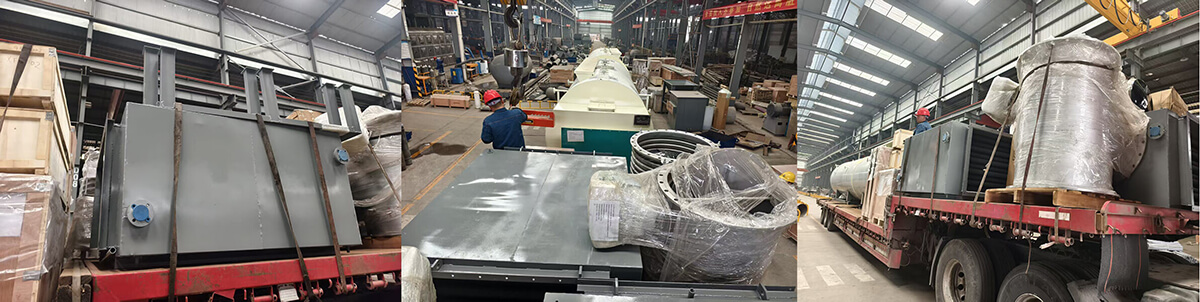
As an important global garment processing base, the Ready-Made Garment (RMG) industry is facing dual pressures of high energy consumption and environmental compliance. The high cost of fuel and carbon emissions pressure have become the main challenges plaguing local clothing factories. The core processes of dyeing, finishing, drying, and ironing in the country's clothing factories require continuous consumption of a large amount of steam, and 20% -50% of the energy used in traditional production (such as hot smoke and wastewater from setting and printing machines) is often directly discharged that result in huge energy waste. In this context, a well-known garment factory located on the outskirts of Dhaka decided to comprehensively upgrade its energy system. The factory mainly produces knitted garments for export to Europe , with a complete dyeing, shaping, and drying production line. It has extremely high requirements for steam stability and successful control. They finally chose
Sitong boiler as their partner for energy-saving transformation of thermal equipment, and introduced 2 sets of Q18/450-3.0-1.45 waste heat recovery steam boilers customized by
Sitong boiler to recover high-temperature flue gas and process wastewater waste heat in the clothing production process after multiple rounds of technical evaluation and on-site inspections, thus achieving a green production mode of steam self-sufficiency.
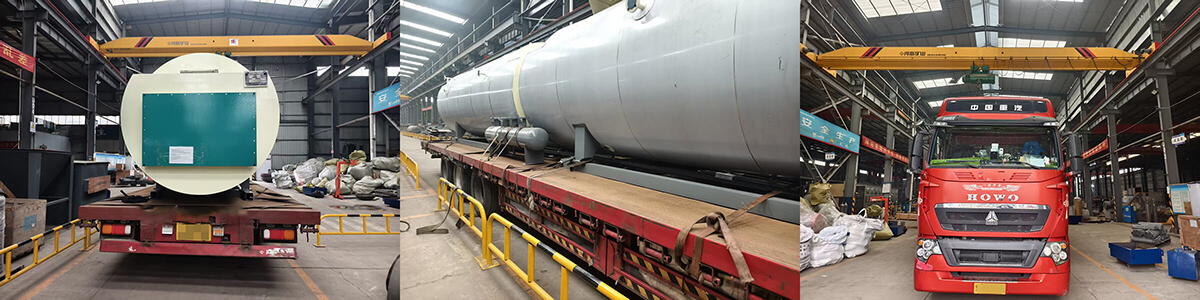
The garment factory originally had multiple shaping machines, which emitted a large amount of high-temperature exhaust gas with a temperature of up to 450 ℃ during the production process.
Sitong boiler's technical team proposed a plan to use 2 sets of Q18/450-3.0-1.45 waste heat recovery boilers adopting the mode of parallel operation to recover the waste heat from the tail gas of the shaping machine in response to the characteristics of multiple production lines and large fluctuations in steam load in the factory. When the production line is operating at full capacity, both boilers will be simultaneously turned on to ensure a stable supply of steam production of 3 tons/hour. While when the production load decreases during the off-season or at night, it can be operated individually and flexibly adjusted to avoid energy waste. The working pressure of 1.45 MPa can meet the thermal energy requirements of ironing, drying, and some dyeing processes, which can avoid unnecessary equipment costs and safety risks caused by high parameters.
Sitong boiler has also equipped the boiler with an efficient automatic vibration cleaning device to address the potential presence of lint and oily substances in textile waste gas. This ensures that the heat exchange surface remains efficient for a long time to prevent blockage and corrosion, and extend the boiler's service life. The successful application of these 2 sets of Q18/450-3.0-1.45 waste heat recovery steam boilers for the garment factory in Bangladesh is another strong proof that
Sitong boiler has deeply cultivated the markets along the "the Belt and Road" and helped the green transformation of traditional industries. In the future,
Sitong boiler will continue to provide efficient and customized thermal solutions to serve more clothing and textile enterprises worldwide to help them achieve a win-win situation of economic and environmental benefits.
More information on LinkedIn:
https://www.linkedin.com/feed/update/urn:li:activity:7435596560777912321Related video on YouTube:
https://www.youtube.com/watch?v=Ub5l6t4Q1QM