As the world's second largest textile exporting country, Bangladesh's textile industry contributes more than 80% of the country's export value. However, its traditional production mode has long faced 2 major bottlenecks: one is the quality problems of color difference and uneven drying caused by steam supply interruption, and the other is the high emissions and energy consumption brought by coal-fired boilers. A medium-sized printing and dyeing enterprise located in Dhaka Textile Industrial Park reached cooperation with
Sitong boiler this time who has 2 printing production lines and 3 dyeing production lines with a daily steam demand of 8-10 tons. At the end of 2025, in response to the requirement of NOx emissions ≤ 50mg/Nm ³ in the Bangladesh government's Industrial Emission Reduction Action Plan (2023-2028), and to address the pain points of the original coal-fired boiler's thermal efficiency being less than 75% and frequent shutdowns for maintenance, the company launched an energy equipment upgrade project. They ultimately chose
Sitong boiler's WNS series fuel gas steam boiler as the core energy equipment. The sales manager Yoyo Wei recommended them the oil gas fired boiler with an output of 10 tons and a rated pressure of 1.25 MPa. This WNS10-1.25-Y.Q series oil gas fired steam boiler from
Sitong boiler is compatible with both gas and oil - dual fuel modes, and it can perfectly adapt to the Bangladesh's gradually improving natural gas pipeline network and emergency fuel supply system to solve its single fuel supply risk.
This boiler adopts a wet back combustion structure and low nitrogen combustion technology, combined with a combustion air design. The measured NOx emissions are as low as 35mg/Nm ³, which far exceed local environmental standards. In addition,
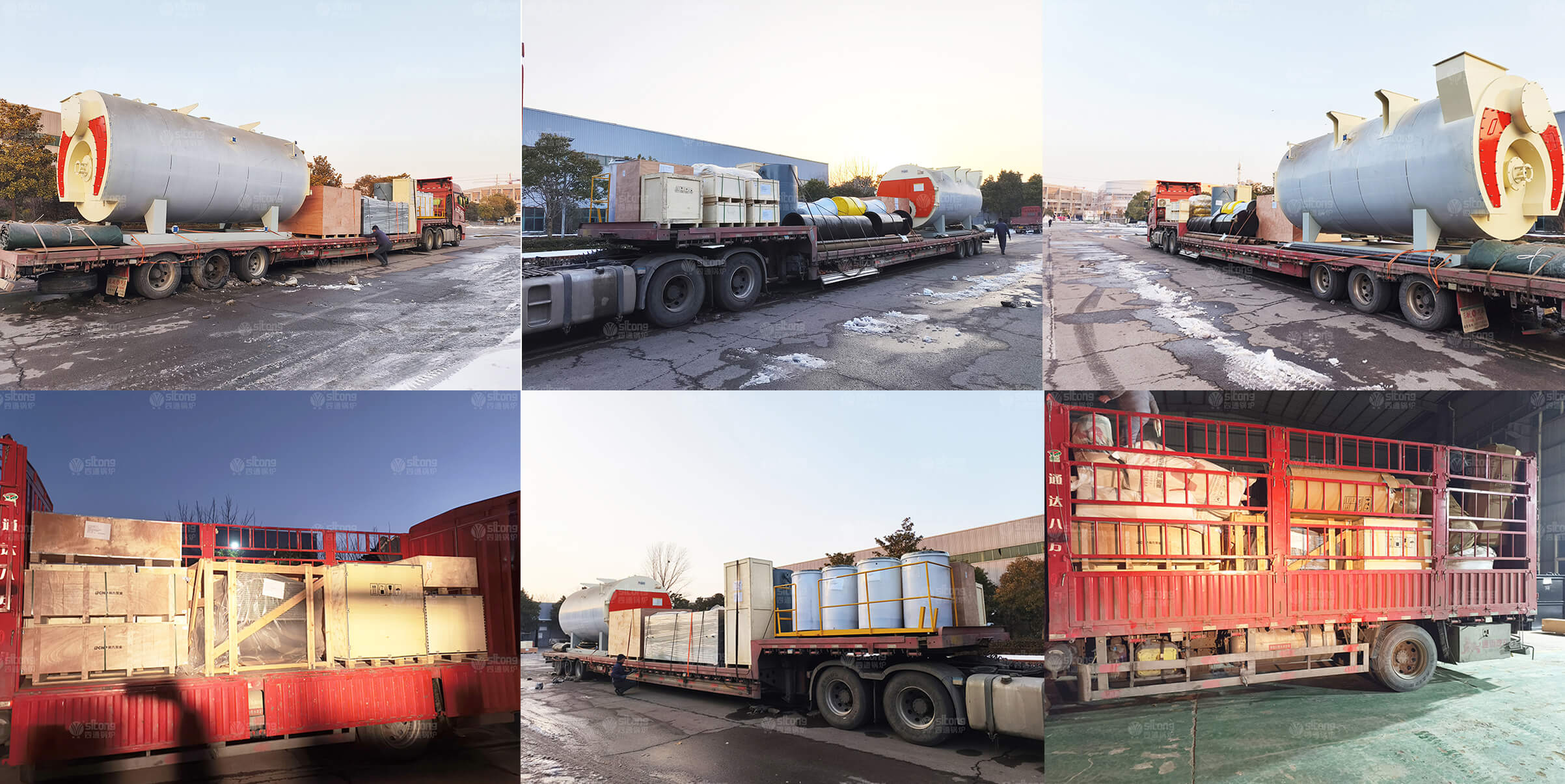
Sitong boiler's design team provided customized solutions for the customer based on the high temperature and humidity climate and textile workshop layout characteristics of the Bangladesh. The boiler also adopts a modular design. It can be retrofitted and installed on the basis of its original boiler room to quickly complete equipment debugging and put into use as soon as it arrives at the applying site. This WNS10-1.25-Y.Q series oil gas fired steam boiler is also equipped with a PLC automatic control system that monitors steam pressure, water level, and combustion status in real time. When the printing and dyeing process needs to adjust the steam volume, the response speed is ≤ 30 seconds to avoid pressure fluctuations caused by traditional manual adjustment. The heat transfer is enhanced while achieving self-cleaning of furnace tubes by designing the convective heating surface through threaded tubes. Its monthly maintenance time is significantly reduced combined with a remote fault diagnosis system. The successful application of this WNS10-1.25-Y.Q series oil gas fired steam boiler in this textile enterprise in the Bangladesh once again demonstrates the technical strength of Chinese manufacturing in the field of efficient and energy-saving boilers. It also provides practical solutions for the upgrading of traditional industries in countries along the "the Belt and Road". The textile enterprises in the Bangladesh are steadily advancing towards green manufacturing and sustainable development goals through the transformation of intelligent and clean thermal energy equipment. The picture shows the delivery site of the boiler:
More information on LinkedIn:
https://www.linkedin.com/feed/update/urn:li:activity:7422903393377079296Delivery video on YouTube:
https://www.youtube.com/watch?v=nPRDnvr3yHA